The Kings Table
An Tábla Rí — The King’s Table
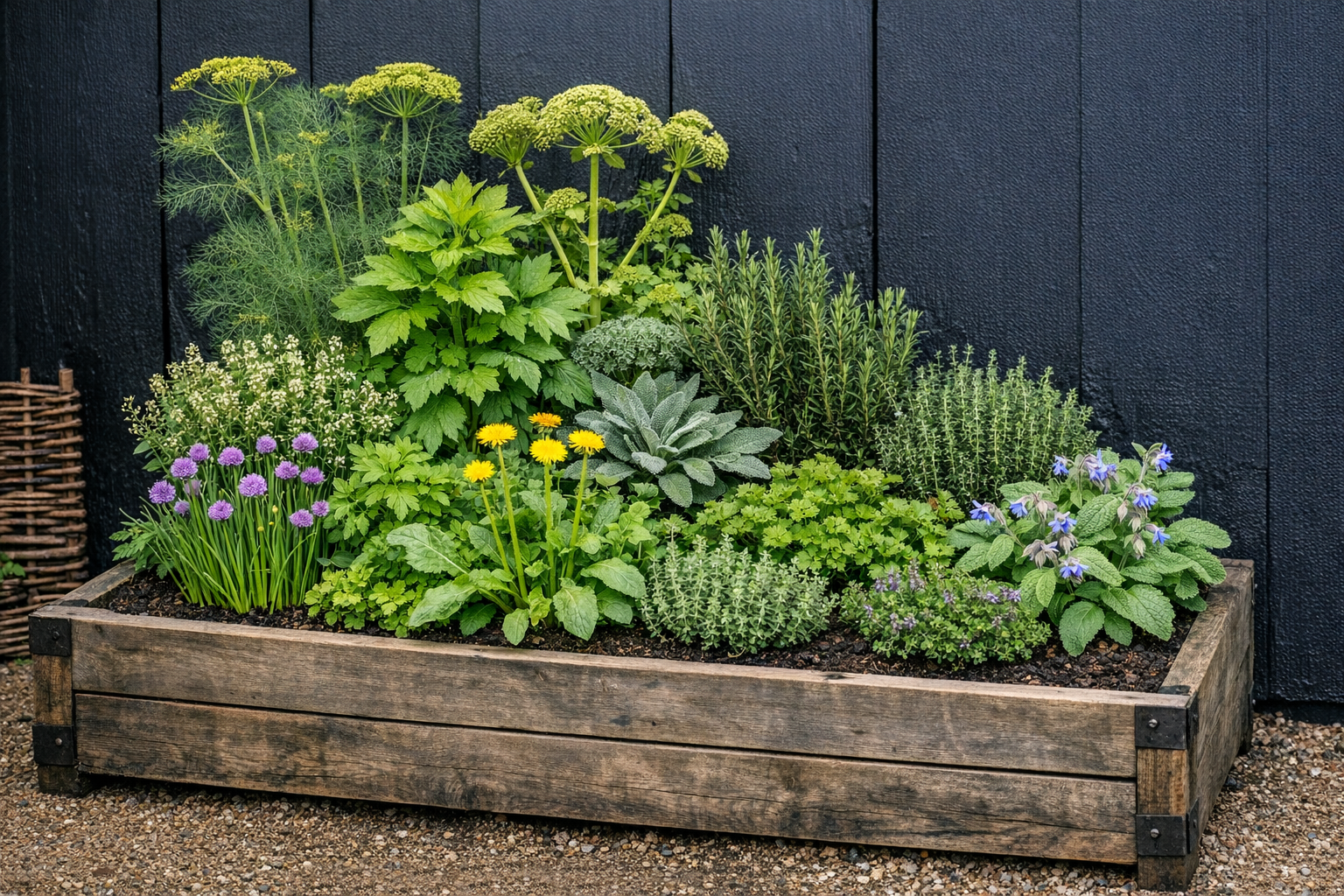
A feast of flavour and folklore, celebrating the herbs that once graced royal banquets and humble hearths alike. These plants seasoned food, soothed digestion, and brought brightness to the medieval table — a living link between nourishment and nature long before refrigeration or spice routes made exotic ingredients common.
Fennel — Féineal
Tall and feathery, féineal carries a sweet anise scent. It was prized for flavouring fish and breads, and its seeds were chewed after meals to freshen the breath. Every part of the plant is edible, symbolising abundance and generosity.
Lovage — Lus Leamhain
A bold, aromatic herb once used like celery. Lus leamhain lifted soups and stews, and its stems were candied or added to ale. Monks valued it for warming the stomach and reviving appetite — a true kitchen companion.
Angelica — Aingealóg
A tall, stately plant with sweet, perfumed stems. Aingealóg was candied for feast-day treats and added to liqueurs. Legend says the Archangel Michael revealed its virtues during plague times, making it a herb of protection and celebration.
Sage — Saileach Bheag (also Sáiste)
A classic herb of wisdom and longevity. Saileach bheag was used in rich roasts and winter dishes, believed to strengthen body and mind. “Why should a man die while sage grows in his garden?” — a proverb that still rings true.
Rosemary — Rósmharóg
Fragrant and evergreen, rósmharóg symbolises memory and fidelity. It flavoured lamb and bread, and was woven into garlands for weddings and feasts. Its scent brightens the hearth and the spirit alike.
Plantain — Slánlus
Known for healing, slánlus also served as a mild green in pottages. Its ribbed leaves fed and soothed generations. A steadfast herb of the everyday table and the wayside path.
Chives — Síobhas
Bright and cheerful, síobhas adds gentle onion flavour to eggs and cheese dishes. Its purple flowers are edible too, bringing colour and joy to the plate. A symbol of spring’s return.
Thyme — Tím
Small but mighty, tím carries warmth and courage. Used in roasts, vinegars, and herbal wines, it was said to inspire bravery in knights and cooks alike. It symbolised courage and was often embroidered on medieval garments. A herb of heart and hearth.
Parsley — Peirsil
Fresh and green, peirsil brightens sauces and broths. It was grown near the kitchen door for quick snipping and was believed to bring luck when planted with care. A staple of every cook’s garden.