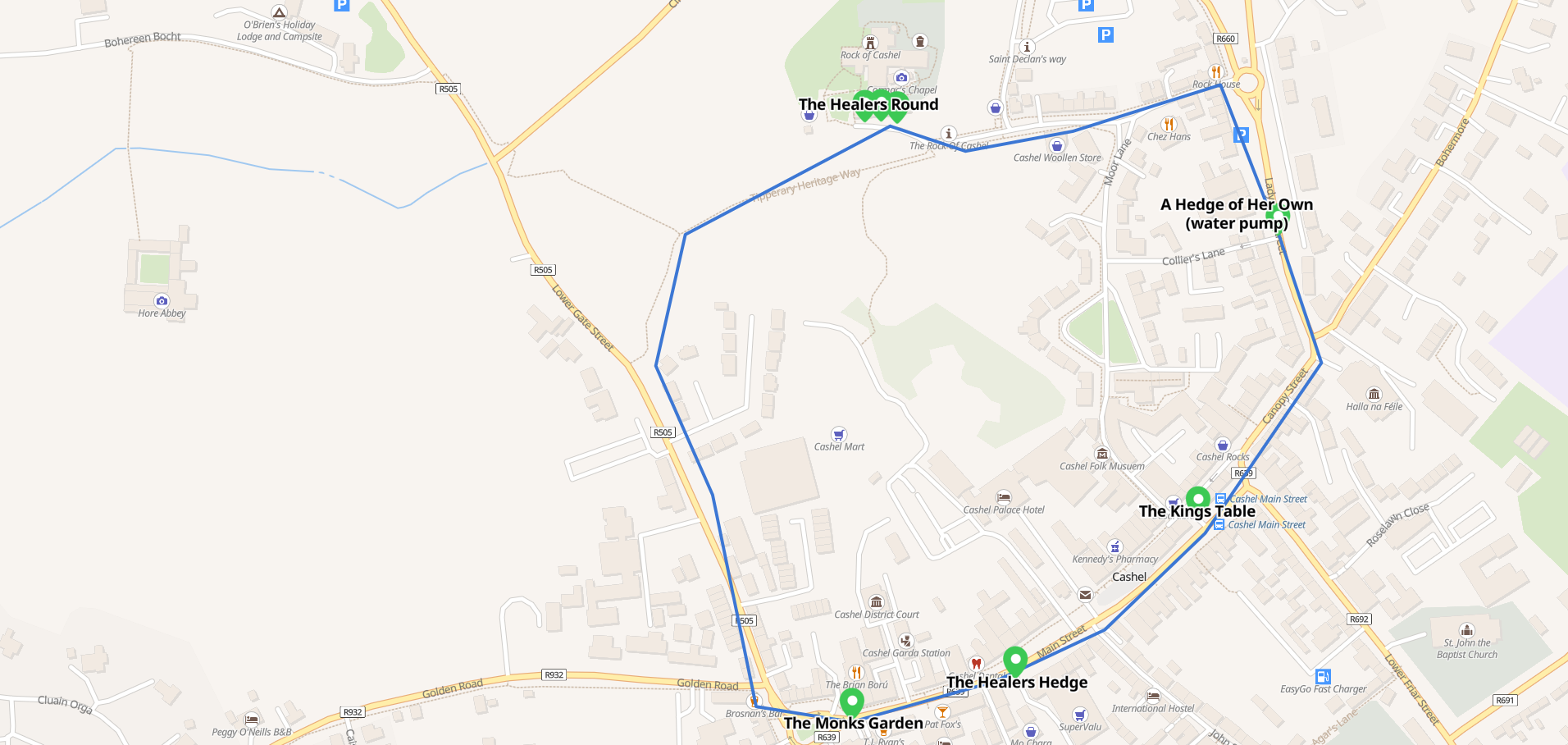
The Healers Hedge
The Healer’s Hedge — Cashel Herb Beds
The heat and draught in Summer 2026 has been challenging to maintain the herbs in planters, we also see this in the hedgerows around Cashel. We are working sustain the plants and have cut them back to support new growth.
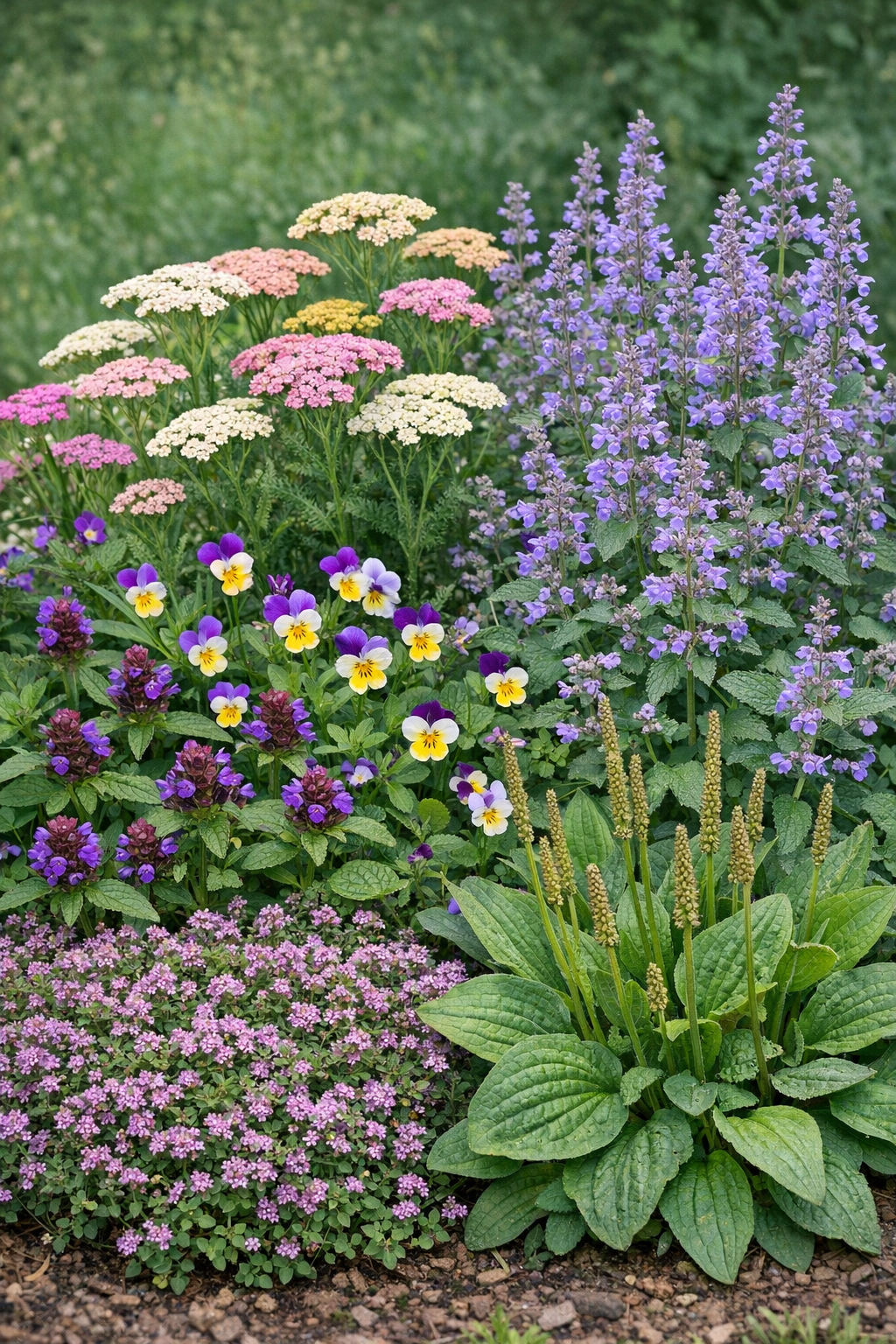
In Irish folklore, a healer’s hedge was a living boundary of protection and remedy, a place where the wise gathered plants to soothe the heart, mend wounds, calm fevers, and guard the home. The herbs growing here — motherwort, rosemary, mint, yarrow, parsley, lavender, wormwood, and self‑heal — echo that tradition, though not all of them would have been familiar to our ancestors. As Ireland’s climate warms and seasons shift, herbs once tied to Mediterranean monastic gardens and travelling healers are becoming easier to grow, stepping in where some native plants may begin to struggle. In this way, our healer’s hedge becomes a blend of old and new: a meeting place of native cures and incoming herbs, adapting together to the changing landscape. Many of these humble plants served as the household apothecary, the cook’s companions, and the traveller’s quiet protectors. Each herb carried its own lore, its own virtue, and its own place in daily life.
Yarrow — Athair Thalún
Used to staunch bleeding and knit wounds, yarrow was prized by warriors and healers alike. Its feathery leaves were also brewed to ease fevers and support digestion.
Selfheal — Slánlus
A small but mighty plant, gathered for sore throats, mouth ulcers, and general “weakness of the body.” Medieval herbalists believed it grew wherever healing was needed most.
Catmint — Spíon Cat
Valued for calming the nerves and settling the stomach. Its gentle nature made it a favourite for children, the elderly, and anyone troubled by restlessness.
Thyme — Tím
A culinary treasure and a medicinal ally. Thyme was used to clear the chest, warm the digestion, and strengthen the spirit. In kitchens, it flavoured broths and preserved meats.
Motherwort — Lus na Máthar
Long associated with easing the heart and calming the spirit, motherwort was valued by medieval herbalists for its steadying influence. Though not native to Ireland, it found a place in monastic gardens, where it was gathered for women’s health and to soothe anxious hearts.
Rosemary — Rós Mhuire
Growing in the Healer’s Hedge planter, rosemary brings its ancient reputation for memory, clarity, and protection. Introduced to Ireland through Mediterranean trade and monastic routes, it thrives more easily today in our milder climate. Its fragrant sprigs were used to bless homes, sharpen the mind, and guard against illness.
Mint — Miontas
Mint anchors the Healer’s Hedge planter with a herb long familiar to Irish households. Gathered to settle the stomach, freshen the breath, and lift the spirits, mint was a dependable remedy in medieval Ireland. Its bright scent was believed to chase away tiredness and clear the head.
Wormwood —Dris na n‑Deamhan
Wormwood adds a note of powerful remedy to the Healer’s Hedge planter. Known for its bitter strength, it was used in medieval Europe to cleanse the gut and ward off ill spirits. Though not widely native, it appears in Irish monastic herbals as a plant to be used with care and respect.
Parsley — Peirsil
Parsley grows in the Healer’s Hedge planter as both food and medicine. Medieval healers used it to cleanse the blood, ease swelling, and strengthen the body. A humble kitchen herb today, it once held a respected place in Irish herb lore.